
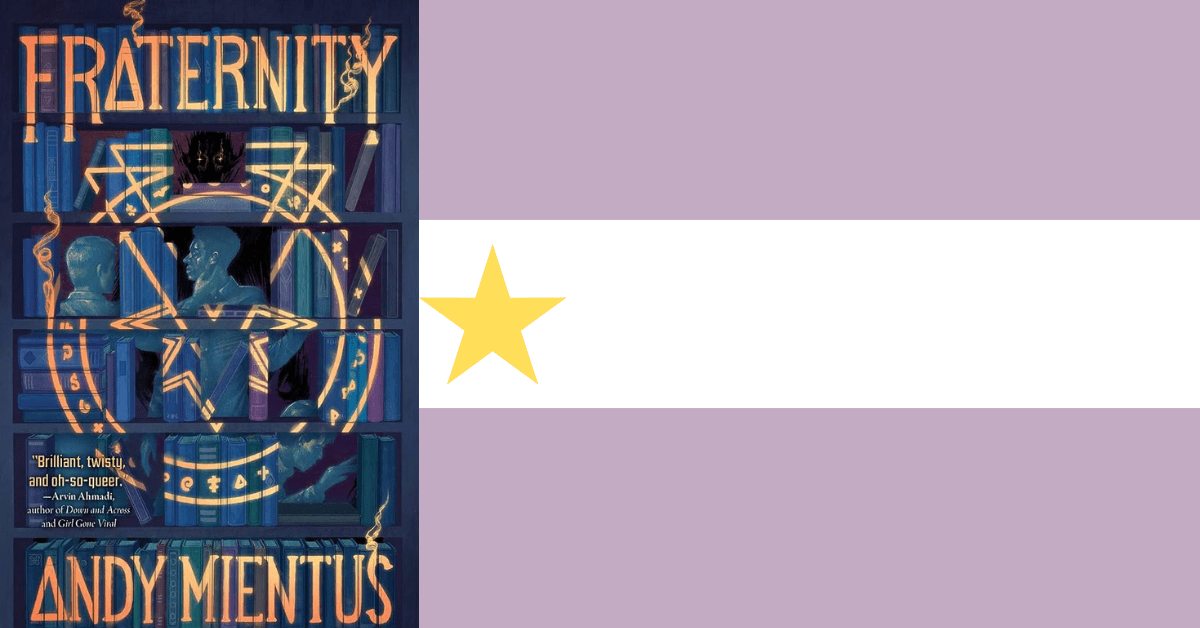
*This review might seem a little less polished, more rambling, but there were so many parts of this book that got on my nerves and so I had to get it out.*
A secret society. An Occultist book. Magic. An antagonist cult group. A demon. What’s not to love?
This novel started off as a four star read, I was really enjoying the first few chapters, maybe half, but, oh boy, did it go down hill fast; a sports car with no brakes.
From the blurb of this book, I was expecting a paranormal witchy story about a group of gay young people pushed into a secret society due to social injustices; the AIDs pandemic. But, nope, if anything, the paranormal aspect of this book seemed like an after thought, maybe with sales in mind. The secret society that was promised in the blurb was hardly even explored, and nor was the magic.
This book is, infact, a lecture on gay history, an increasingly overbearing one at that. Which, fantastic, I love books, both fiction and non fiction, on gay history and struggle. I’d read it all day, if I could, but normally I’m expecting it and the blurb is at least honest on other books.
I wanted, which was promised, a paranormal, culty, story, but inside I got a not at all discreet lecture on the government in the 80s.
We have three main characters. Zooey, an average bisexual boy who’s awkward and shy; and suddenly turns Asain half way through the book, despite the fact it wasn’t brought up before when discussing racism, as if the author just decided to diversify the characters without bring up racial issues in the 90s!! And when found out, was then marvelled at my other characters, without condemning this fetishisation of it. Daniel, a jock, popular, hanging on to being the best he can, under an overbearing father and with constant casual racism thrown his way, one of the only black teens at school. And Leo, a flamboyant want to be actor, who wants every gay boy to be as confident as himself; a boy who character development does not know. We also meet Steven, who isn’t used as a narrator, but is a friend who can translate Latin for them from the spell book.
In the span of 350 pages, these topics were discussed…. Hold on tight.
1) Being gay.
2) Aids.
3) Bullying.
4) Racism.
Used in the first half of the book, great, no complaints; these topics blended so well into the narrative, making each main character compelling and realistic. I belived everyone’s motives for using the spell book when the time came, I believed the dramatic moment when our group became unusally vengeful instead of curious. And, at this point, the magic, the occult, were so well used, and shown to be so powerful, so scary, that I was on the edge of my seat. The storm, and the first death, were so poinient and haunting, my mouth dropped.
Then suddenly, all the gays got expelled. Just halfway through the book, the club, the club talked about in the blurb, no longer existed, not that it mattered much to the magic plot anyway, it turns out.
Oh, and then one of the main characters is taken over by darkness. Or is he, seen as he is suddenly free after a few chapters when it becomes convenient to the plot, like the demon just decided to leave him alone; what a kind demon! Once in his mind, twisting his attitude, making him evil, it just…leaves….
So our main characters are split up from each other by their dramatic actions. Obviously, the next logical step, you’d expect our main characters to try and find a way out of this and defeat the evil they have released. Nope. Zooey has already got that plan sorted, tucked conveniently in his back pocket, to be used later on.
They go seperate ways. One lies his way out of an expulsion, or so the demon does before it goes. One dies, R.I.P Steven, he’s lucky he didn’t have to experience the book. One is sent away. And one finds out his father is randomly alive despite thinking he is dead…?
So, back to the list of issues tackled for the second half of the book, during what should have been the time our main characters worked together to overcome evil.
5) Bisexuality. Great, Bisexual rep, only, no, it’s used as shock value rather than Zooey naturally coming to terms with it. As he is narrating, some future version talking to the audience, he frames it as *surprise, I like girls too*. Why? I’ll awnswer it. So his character can get close to a future antagonist who just so happens to know his girlfriend. His bisexuality, and his relationship with Mallory, a girl not mentioned until convenient despite the fact they were friends, seems to serve no other purpose to the narrative other than for Zooey to meet the powers threatening the gay community. Surely, he could have been introduced by his head master to this antagonist; whom is already revealed to be part of the antagonist group, and is becoming ever impressed with Zooey. And when Mallory isn’t needed…Zooey just all of a sudden forgets that he isn’t supposed to be mentioning that he was part of a gay club and Mallory dumps him. This would have been effective if used to strengthen Zooey’s relationship with his friends, but no…. Once again, just to show the negative reaction some women can have to Bisexuality.
6) AIDs. Again, great history lesson, but to present it through a secret, suddenly not-dead father (Leo’s), who just so happened to have been a member of the antagonist cult, who just so happens to regret it, and just so happens to be dying at the right moment to give them important clues, seems like lazy storytelling. Oh, and seen as Latin knowing friend is dead, he was also pretty useful there, covenietly. Convenience can be over looked, but when it’s used so much…. Was this characters inclusion to move the story along, or show what AIDS did to a person? A history lesson is wonderful, but to detriment of plot? They had a Latin teacher, they got on well with, who was nice, and trust worthy, they could have got the translation from him by email. As haunting as the description of Leo’s Father’s appearance and treatment is, it was, seemingly, merely to bring awareness. Now, I did actually enjoy the scene with the AIDs riot group just after, because it served to remind Zooey of what’s important in life, and that is living it happily and with love.
7) Conversion therapy. Again, an important subjects, which many books have tackled perfectly. But to have a character, for just one chapter, one oh so long winded chapter, locked in a conversation therapy program, with no narrative reason, does the issue no favours. Daniel could have simply been kicked out by his father and then moved in with his boyfriend for a while with all the use the chapter had to the plot. The conversation therapy scenes, once again, served only the purpose of saying CoNvErSiOn ThErApY iS bAd, which makes a very real problem seem so…trivial, especially when your character is quickly taken from it; unaffected. Daniel learnt nothing here that helped him later on in the book, he’d already come to terms with himself. None of his experience was used in the final push. He was just hapily with mates a few hours after being commited to this place. There was also a whole section in this chapter that went on about how dead naming is bad, Daniel meeting a Trangender guy, who, once again, played no part to the plot. Astrics were used when the dead name was said, which, cool, make a statement, but not when A DEMON IS A SUPPOSED THREAT TO YOU AND YOUR FRIENDS! There was also a section about escaping, which I thought was brought up because Daniel might escape, an action I was looking forward to, but no, his Aunt picks him up. This escape tangent was simply mentioned so they could bring up the issue of suicide in the community…the one’s that don’t escape escape another way.
And through all of this time, no magic is really happening. Sure, we get told that members of the government are using it, to rig elecions, but it’s very much a backstory to injustice. Why promote this book as magical if you aren’t making more of a big deal about how powerful it is.
Also, remember, they’ve just inadvertently killed someone with this magic. Why aren’t random oppositions dying because of this secret cult? Why aren’t more heinous things happing? And, as for our main characters, wouldn’t this be a time for reflection? Guilt? Anguish? Apparently not. Not to mention, during what should be emotional scenes, pop culture references come at weird times. Kill someone, a little remorse, need to chat to their guilty friends to debrief, then…oh no, freddie mercury has died…. As great as Freddie was, YOU’VE JUST KILLED SOMEONE!!!! Why would you make a big deal over some celebrity at this low point? Again, just a means to say, look what AIDs did.
Never has a gay rights book, in all my days of reading gay lit, made me care less about the characters and their struggles.
By the end, I’d have been okay if the demon had killed them all; that’s if the demon remembered it existed in the first place. The ending too was so lacklustre. I expected, once we finally returned to the magic, a big moment, three of them fighting as one.
But, no, apparently Zooey must defeat the monster alone, because he, oh so conveniently, remembers a magical dream he had a few days before that said he must. So, instead of a showdown, and epic magic, we get an alternate life fantasy that shows us Zooey’s life if he joined the cult, a cult which he was never offered to join, which really just serves as an excuse to bring dead AIDs patients back in a vision to convince him to defeat the demon and live as a bisexual man.
Excuse me? What? Is the demon killing AIDs patients now? Why are they so invested in it being killed? Do they even know about the demon? Why does Zooey know enough of them to imagine them all? Or is this just a lazy allegory on how all of us, specifically gay people, should stick together; a vision of him surrounded by men, completely ignoring the women and children who were also affected by this illness.
The leader of this vision though is, for some bizarre reason, Leo’s dead dad, who Zooey met once for around 5 minutes. Sure, a dead person coming back, seeing them again, can make for emotional scenes, but…Leo’s dad. Zooey’s mother is dead, someone he talks about a lot in the book. Wouldn’t it make more sense for her to come back and guide him? Wouldn’t her acceptance of him, her love, convince him of living his real life more than a random man he’d never even known. Why not her? Because she’s straight?
So, after essentially telling the demon to go away, he is free, the boys can just go back to normal. None of the cult, who they have robbed of power, want to kill them anymore, for some reason, their head teacher dies, and suddenly they are unexpelled, even if they can no longer pay tuition.
And then, we find out, the cult representative running for election loses by a narrow margin. So, what exactly was magic supposed to help if they did well without it?
This book feels like it’s one story, wrapped up in another about magic just to give it an edge. If these were two different books, they would be beautiful, together, it’s not.
I know so many people love this book, maybe they were taken in my beautiful words, some of them are, but the plot just wasn’t there.
Although it seems like I’m picking all these social commentaries to pick at, it’s not due to the fact they are included, it’s because they aren’t used well. Books with representation are important, but what’s the point if you aren’t going to treat them well?

